The unexamined life is not worth living. Or is it, isn’t worth
living? What was it in the original Greek? Plato said it, or Socrates, or
Aristotle. I think it was Socrates. These men were forever saying quotable
things. One feels it would have been near kingly to have lived in that time as
an amanuensis, recording thoughts for the future.
At times, I want to remind Plato that the examined life is
not entirely all it’s cracked up to be. It was Swift in Gulliver’s Travels who elucidates
this point so finely, where an increased visual aptitude leads to the discovery
of flaws in what Gulliver thought was a flaweless woman.
Sometimes I’ll watch a television show and wonder about the
lives of the characters, and I’ll have to stop myself from going much further,
and instead, I’ll wonder about the lives of the people playing the characters,
whether they’re happy, if acting on this show is everything they dreamed it
could be, if they have a dog, or children, or a drinking habit. Examining the
lives of others is not worth doing.
A beautiful thing happened on the way to work today. Okay, a
beautiful thing did not happen on the way to work today. However, what if it
had? Imagine how much better my day might have been? In fact, in retrospect, as
life is always expertly lived in hindsight, something beautiful did happen on
the way to work. I was standing on the sidewalk, near puddles on the garden
path, and my daughter asked me to smell a pink azalea with her. It didn’t smell
like anything, and in fact, all she asked me to do was touch it, and it was not
beautiful, because I was thinking about the traffic coming, and the sunlight,
and the hour of the day, but when looked at from some distance, you could see
how it could be thought of as beautiful.
Today is the sort of day that a person should be reflecting
on their mother. My mother was young once and lived in the Midwest. Later, when
I knew her better, she was my mother. I remember her near boundless capacity
for reading books to her three eager children, of Lions and Witches and Wardrobes
and Taran wandering towards becoming the High King. I also remember my
boundless capacity for sleep. And later, as we aged, I remember her boundless
capacity for falling asleep while reading, the words starting to slur together,
and our, or perhaps just my gentle nudges, trying to remind her to stay awake.
I blame her for my own interest in reading. Live long enough
and you’ll be able to blame your parents for all your failings. I wish she’d
have been teaching me to use an abacus or learn microfinance, but I fear that
sleep may have taken both of us too soon had that been the case.
I remember too, walking during the evening with my mother,
the wind just beginning to rise, to life the veil of oppressive heat from our
home in the valley. We’d walk by small culverts where the frogs were serenading
one another, towards the foothills, blue at the end of the day. We’d talk about
the things that were important to me back then, school, girls, God, and she’d
listen. She’d listen. And sometimes,
many times, that’s all that a son could ask for.
1. When I see something that is not in list form, it tells me
two things immediately, 1) I do not have time to read it. 2) It was probably
constructed by someone over the age of 25, which means I probably don’t want to
read it. 3) I just created a list within a list to show how amazing lists are.
2. Quite frankly, even if someone made a grocery list I’d probably
read it. Did they really put bananas at number three? Number three for bananas?
I mean, what about when they get kind of mushy and nobody wants to eat them? Is
it okay to break off bananas, I always do, but I feel a little guilty. Like, is
someone watching who is going to make you pay for the bananas? Is there a
preferred number?
3. Sometimes I’ll see something that is not in list form,
like a paragraph or something, and I’ll just wonder why such antiquated means
of communication existed for such a long time, and why it’s so hard to make
paradigm shifts like we’re making right now, and I’ll feel sad for a minute or
two, and maybe make a list of songs that make me sad, which makes me feel
better.
4. Lists are a way of creating a kind of structure. And
though being young is about living an unstructured life, it’s also about
identifying the structures like sexism and were clowns ever not scary, like,
did a time exist when people weren’t just scared shi-less by them. And list
making allows us to both identify structure, and yet, by appropriating the form
of the dominant social group, soccer mom making grocery, we are recreating it
in a manner that subverts its original intent. I mean really, when is putting
makeup on and jumping out at people not scary? Olden days are crazy.
5. Lists are just inherently fun, because you can say things
like: 23 ways to enjoy your summer break. And really, who picks 23, what a
crazy number. But that’s the crazy thing about lists, you can shoot for the stars
with them. Hell, make a list with 100 things on it. Just don’t expect me to
read it.
6. Imagine if someone came up to you and said, “It’s really
great to be young.” And then someone else came up to you and said, “Here are
the ten reasons that it’s great to be young.” Be honest, it sounds like that
second guy really has his shi- together. And yeah, maybe he’s underemployed and
floating around with some friends before heading up to Portland, Oregon to make
his way, but look, he’s got a list. He’s got a plan. It just isn’t your plan.
Also, he doesn’t have a car and needs a ride to Portland, and then to and from
work once he gets there.
7. It’s a religious thing. Look at the Ten Commandments.
God, like us, knew that if you really want people to pay attention to something
you do it in list form. But like, as an aside, how long was he gone? How did
people wind up worshipping a golden calf? How long did they wait? I mean, I
hope they at least let him get out of sight and up the mountain. Awkward. The
point is, the list, has, was, is, and always will be the highest form of human
communication. Now I’m going to go make a list of the seven things that make
lists awful.
Here is a picture of a dog. This dog has just pooped on your carpet.
My chief problem with writing is that I’m lazy,
indiscriminately, fantastically, lazy. I’m always “working” on things. The term
work is not in quotes accidentally. After I’ve been working on something for a
while, I’ll want it be done, and so I’ll stop working on it, or, on the off
chanc
e that I finish it, I’ll ignore all of the obvious errors in logic or
continuity in favor of calling it done.
I believe the agreed upon answer is no, though
I think everyone would be a whole hell of a lot happier if they could just answer
yes. Of course, I answer yes all the time, and then go back and look at something
I’ve written, realizing immediately that the proper answer was no. I suppose
the object lesson is that the right answer to most questions in life is no. It’s
safer that way.
Conclusion: Maybe I just need to write very short stories,
set very modest goals.
Example:
I want to write a story about a dog.
Story:
The dog had brown fur. He liked to play tug of war. The dog was happy. He liked
to sleep.
Am I done writing a story about a dog? I think so. I think
the story is complete. Sure you could add some portions about the light falling
diagonally through the panes of dirty windows, or give the dog some texture by
providing some information about the dog’s owners etc, but then I think you’re
just wandering down a labyrinth. If no story is ever truly done then every
story should go on for thousands and thousands of pages. I think this is what
Robert Musil was attempting in The Man Without Qualities. Or perhaps, if every
story is only complete when it’s kept on a small scale, every story should be
only one sentence.
Example:
The day that she died was a good one for reasons I can’t get
into right now.
Okay, so we have a death, a character responding to the
death in an interesting manner and then forestalling any future communication
about the death. I’m happy.
Example:
He was delighted the first time one of his sculptures came
to life, though, by Autumn, he’d concluded that they were as drab as everyone
else he knew.
Example:
That was the summer all the adults turned into fish and swam
upriver.
Example:
In September, all the leaves turned golden, and we smoked
pipes on covered porches, overlooking tiny square yards, reminiscing on what
failures we’d all become.
Example:
It was less a matter of me shooting the bird than of a
profound failure of imagination on his part, taking the bullet when he could
soar to the heavens.
The GOT universe has many recurrent themes, most borderline nihilistic,
one of which is that love or desiring someone else is probably going to result
in abject failure. A person in this universe must always be scheming, not
loving, sex is a distraction, not a means of enjoyment. And yet, I found it
interesting that this episode was bookended by two love stories. The voice over
goes to Littlefinger, reminding the viewers that life in the GOT universe is a relentless
climb through the chaos of life to gain more power. And though a voice over,
and a 700 foot climb up a sheet of ice, make it seem like the theme of the
episode, strangely, what I took away was love.
There was a certain verisimilitude to the two love stories
that began and ended this episode of GOT, though juxtaposed against one another
it’s rather easy to point out the differences. The episode begins with Samwell
and Tarley sitting in the darkness, miles from the wall, attempting to make a
fire while the baby sleeps in her arms. Naturally the camera pans away to a
longer shot, revealing the woods, the darkness, the snow, the not so subtle
reminder that the song Samwell is singing about the father loving the baby and
taking care of him must be taking place in some other world. It was an
important moment though, one that should give a viewer pause, because it stands
out like a beacon in the night, two people enjoying one another’s company and
trying to convince each other that everything will be all right. Granted they’ll
probably get eaten alive by White Walkers and then the dragons will come along,
burn the walkers and roast their bones, but they had a nice moment in the dark
there didn’t they? Aren’t we all just like that, sitting in the dark and the
cold reminding one another, trying to convince each other that it’s going to be
okay?
The latter love story, which takes place at the top of the
wall is a GOT first. Jon Snow and Ygritte’s relationship was culminated last
week in sex, but the real test of their relationship happens before they begin
to climb the wall, when Ygritte tells him that she knows he’s lying about not
being a crow. Jon Snow, not the consummate liar, looks like a little boy caught
with his hand in the cookie jar, but just as surely as a forgiving mother,
Ygritte immediately tells him that his secret is safe, but she reminds him to
be loyal to her or risk castration. Juxtpaosed with Samwell singing against the
night, the threat seems violent and real, and thus, more in keeping with the
GOT universe. Jon and Ygritte are the first real couple that we’ve seen develop
on the show, and though their relationship is built on love caves and threats
of castration, it’s about as good as we’re going to get. As Sam and Gilly
remain at the bottom of the wall, Jon and Ygritte, spend the episode climbing
to the top, barely surviving after old crazy eyes tries to cut them loose. And,
in a scene reminiscent of any good romance, they kiss fiercely and take in the
view from the wall. Heart swells, kind of. Unlike Sam and Gilly whom the night
seems to be watching like a hungry wolf, Jon and Ygritte have the sun shining
down on them at the conclusion of the episode, and though they’ll probably also
end up roasted by dragons and reaten by white walkers, at least they’ll do it together.
The real question of the episode seems to be whether love
and loyalty will work in GOT. The answer seems to be, maybe, but it helps to be
able to cut some people with a sword. Ros, who’s smarts at playing various games
have brought her from prostitute way up north to trusted companion of
Littlefinger in King’s Landing, makes one false step and winds up spending the evening
being riddled with arrows by King Joffry. Though it was not surprising to see
Joffry at the other end of the crossbow, it certainly gave the audience more
fodder, as if they could have possibly needed any, to look forward to his
death. This is also an episode in which we learn that he tried to have Tyrion
killed by a member of the King’s guard. And, the only lesson to be drawn is
that it’s good to be king, because otherwise, he’d be off in a dungeon
somewhere having his finger split in two like Theon.
Whatever retribution is being carved out of Theon will need
to start paying off rather soon. If I’ve had a concern with the season thus
far, it’s that some of the scenes are moving too slowly because of the surfeit
of characters. I think it was an intelligent decision by the directors to get
something beyond slogging through the ice happening north of the wall. Granted,
the White Walkers remain a silent partner, the obvious enemy to untie the people,
but I can forgive the directors, and Martin, for not playing their hand too
early. These guys have last battle written all over them. And yet, it was time
for something to happen to the people north of the wall and sticking with Jon
and Ygritte as they climbed the wall was a nice tough. Theon, on the other
hand, continues to be tortured in a way that we’ve seen in movies before, by
some merciless fellow, which generates some sympathy for him, however, we’re
more than halfway through the season and his situation remains exactly the
same. It’s a test of the audiences patience, and if I hadn’t come across a
couple of articles saying that Danerys was at a dead end for a bit, plot wise,
I’d be clamoring to have Theon cut altogether (pun intended) in favor of seeing
more CGI budget expended.
The bonds of love and loyalty are also being tested with
Robb Stark’s army, and though he fell codpiece first over an exotic foreign
woman, he has to virtually insist that his uncle take his place by marrying the
daughter of Lord Walder Frey. The uncle does briefly try and barter for at
least getting the pretty daughter, but he’s immediately shouted down by his comrades,
who then go home and sleep with their pretty wives.
Ironically, the bonds that are strengthened in this episode
are those of the Lannister children. Tyrion learns that Cersei didn’t try and
have him killed at Blackwater, and though they seem entirely unaware that they
could say no to their father, at least they point out that they’ll be united in
their misery. If love is happening north of the wall, down south, it’s being
conducted as it always has been, as a means of fortifying power. Sansa bawls
her eyes out watching Littlefinger sail away, once again proving that all the
Stark brains were spent on the other children and Tyrion has to break the news
that he’ll be marrying her in front of his current girlfriend. It is unclear at
this point whether the Lannister children will ever break free of their father,
or what the outcome would be. Perhaps the lots have already been thrown and it’s
best to ride out the rest of the bet
Jaime Lannister
continues his quest to be the character who changes the most during the course
of the season, attempting to save Brienne, only to be told that she’ll be tried
for treason. The other interesting piece to consider is what value Jaime will
have to his father now that he’s missing his sword hand. Jaime is now somewhere
between the Samwell and Gilly’s and the Jon and Ygritte’s. A good portion of
his power was beholden to him via his ability to fight. It will be interesting
to see if King’s Landing has room for two clever, wounded Lannister children.
Lest we forget the last reminder that loyalty doesn’t always
pay off, the band of brothers agrees to sell of Gendry to Melisandre. Though,
to be fair, it sounds like she intends to make him a kind or high priest or
something, which is the sort of thing they should explain to Arya as it would
probably clear up some misconceptions. I mean, if being taken away in a cart in
chains means you get to return breathing fire and conquering kingdoms, maybe it’s
best that he goes.
In the end, this episode, like many episodes before, seemed
intent on telling two stories. One, loyalty, family, honor, the other, be loyal
to the right people, family might marry you off to an ugly sister, and honor is
useful when it suits you. I suppose we’ll see which view winds up winning out
in the end. Though, as far as we are into this show, I fear that the most likely
thing we’ll get is everything descending into Littlefinger’s chaos and
everybody reaching for a ladder.
We were
talking of pretty things and clinking ice in our glasses. I had spent the
previous summer painting: staying in a small studio, studying lines and shades of
color, learning that red has thirty six different iterations, none of which
perfectly matched the contours and hues of her lips. “That’s the trouble with looking,
with anything,” I said to you. “Once you begin a search in earnest there is no
chance of finding what you’re looking for.”
You shook your head. “Are we talking about keys?”
“I’m speaking abstractedly here. The search for something
abstract, like a perfect shade of red, an idea, the moment when the sun breaks
over the horizon, a pair of perfect lips, these things are all essentially
unattainable. They live in the mind’s eye. They have no real corollary in the physical
world. It is the pursuit of these things that either drives us, to drink, to be
mad, to fire rockets off towards the moon. And that is why we will never be
satisfied in any lasting sense, because the things we desire are not real, they
are phantoms, shadows, pictures of things that have never happened.
The other night, I was lying in bed, feeling half-dead from
lack of sleep when it occurred to me that one day I would be thirty six. Not
tomorrow, not even all that soon, but that one day, at some point in the future
I would be thirty six, and I sprang up from bed and rushed to the studio and
painted for hours. None of it was good. The colors were all wrong. I was trying
to paint the sunset in Paris on a certain day from my youth when I was at the
top of the tower in Sacre Couer, alone, beautifully alone, but I messed the
whole damn thing up. And yet, if I’m honest with you, I felt so much more
content as the morning light started coming in the window, touching off slivers
of light that looked like small schools of fish swimming across the oak boards.
It’s absurd yes, to worry that one day you’ll be thirty six?
I believe the more common date to worry over is that of one’s death, but, my
God, death is an abstraction, aging a certainty. You see what I’m saying. After
I’m gone who will care what I’ve done? Certainly not me, but while I live,
well, the painting was terrible anyway. I don’t know why it brought me peace.
Myself, she responded, technically I’ve never been good at
anything. That is not entirely true. As a child, third or fourth grade or so, I
was amazing at the times tables. I could spit out the answers to anything in
the 1 to twelve range as if they were emblazoned on my brain. It struck me, and
everyone else, as a sign that I was intelligent, one to watch out for. What
this “skill” turned out to be was just proof that I was a fairly substandard
computer. I mean, drill it into me enough, and I can compute quickly, but it
turns out that I was born in the wrong era, all that work is done by computers
now, not by some strange girl with a knack for numbers.
It was a kind of relief though. I don’t understand the sort
of fear of not achieving perfection that you’re speaking of. I’ve never imagined
myself to be the paragon or paramour or parawhatever of anything. Consequently,
my life isn’t dictated by the sorts of pressures that you’re speaking of. I
wonder sometimes, after leaving a room, if the people I’ve been talking with
have found me pleasant, or if I’ve said something slightly dopey, but beyond
that, no, nothing like what you’re describing. It sounds like an exhausting way
to live and probably not worth the trouble.
At that point of time in my life the two of us were in love
for no discernible reason. I’d have pointed to some of her more noteworthy traits
but the truth of the matter is that the whole thing was strange, a happenstance
that seemed more born out of the two of us being so constantly thrown together
during the previous three years than something we’d freely chosen. We were getting together now, three of four
times a week and having these ridiculous conversations in which we could agree
on nothing, just waiting for the feeling to pass, hoping that we’d catch a
glimmer on the way to get another whiskey in the eye of the other that would
say, “it has passed.” Barring that, I suppose we’ll just keep meeting in the
evening, exchanging pleasantries until one of us finds another city to move
too, or another person to love.
For now I am listening to her talk about her cousin’s
sister, something about the cut of a dress in an upcoming wedding. I tell her
that I need to leave soon, but I can see through the lattices and bars of the
old window that snow has begun falling, heavy, thick, and wet. I mean to be
leaving soon, but I can see that we’ll be together for at least the remainder
of this night. I catch her hand in my own, and tell her that I love her. No.
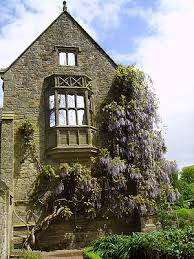
That was someone else. I am watching the wisteria climb the large clock in the
courtyard. Time, it moves so slowly, this moment so quickly.
I look for beauty in the strangest of places. As if, life,
my life in particular, was somehow wedded to beauty. As though the world was
designed to be aesthetically pleasing, full not of being, but of moments,
concrete things that a person can hang a day on. I don’t know where I came by
this idea. I think that the images I’m trying to recreate are from old
commercials or movies, in which the texture of the scene is enriched by music
playing in the background.
And suddenly I am listening to a song by Lyle Lovett after
catching snippets of it in the background of a show.
And three things are happening at once. I’m thinking of Steven
Pinker, how he said that music is, “auditory cheesecake.” And I can’t remember
exactly why I should believe Steven Pinker, though I often think that music is
auditory cheesecake. But, I like cheesecake. I suppose his point is that I
should eat cheesecake less frequently, or that I should only listen to music at
a party, or when I am feeling blue, or if I am having good coffee. But then
again, I do not remember who he is.
I am also feeling moved by the music and thinking that it
would be odd if I started crying here, sitting alone near midnight listening to
a song, and how that isn’t the sort of way that a person should spend a Friday
night. A person should spend a Friday in bed, in laughter, drinking, watching a
movie, doing a puzzle, dancing until 2 A.M., a person should not be almost
crying while listening to a song they have just heard. And yet, I am a person
almost crying to a song that I’ve only just heard. And it occurs to me that maybe I'm not all that sad about the song, but sad that its been so long that I listened to something so quiet. And that maybe, I didn't almost cry, but thought that I almost cried because it happened an hour ago. Maybe what I did was felt something. I couldn't say for sure.
I am also remembering that Lyle Lovett was once married to
Julia Roberts, and how everyone was confounded by their marriage years ago, and
how much worse it would be now. But really, really I’m wondering what I’m
supposed to do with all the ephemera piling up in my brain like so much useless
dust, or cheesecake or music lyrics. And I wonder why my brain has stored so
many odds and ends. I wonder why it couldn’t have grasped Geometry, perhaps it
was too busy remembering the part in Anna Begins when rain starts to fall or
she begins to fade away. And instead I’m remembering that night, years and
years ago, when we stood twenty feet from the stage listening to songs from my
first ever cassette tape, and how it’s okay, that that evening is still lodged
there. How we were all there listening together, how maybe music doesn’t always
have to be auditory cheesecake, how sometimes it can make us stand in the dark
and feel something.
And now I am listening to music and thinking of cheesecake,
which is, if I understand Steven Pinker correctly, exactly the way a person is
supposed to spend their time. Though I’ve been guilty often of misunderstanding
people when it suits me, for three months in college I pretended my girlfriend
spoke Chinese because I didn’t like what she was saying to me. I covered her
room in Chinese characters, decorated the mirrors and the walls with words I
found in the library that said things like “trust” and “love.” I built a series
of origami swans that showed a time lapse type scene of being born, growing up,
and then failing in love and put them on her dresser with a note that said, “This.”
I trained a parrot to speak, and put it up in her room. Whenever she looked out
the window he would say that he loved her. After a week, when I’d enter, he’d
just mumble “bastard.” And I could see then, looking at that failed parrot just
what Flaubert meant when he said,” “Language is a cracked kettle on which we
beat out tunes for bears to dance to, while all the time we long to move the
stars to pity.”
But the part that moved me to pity was that he’d already
said it, and so I couldn’t say it after him, or couldn’t say it as well. I
could say: language is an inadequate medium in which to show our true selves,
but that is clunky. I could say:
Language is a dead horse that we beat senselessly when we
intend to wake it up. (And though it has the virtue of including the animal, the animal is not dancing, but dead, which seems like a step down. And don't even get me started about the stars).
Language is like a sand dollar that you find on the shore as
a young lad, and you take it back and show it to your mother, and she tells you
that it is perfect, and you hold it in your small fingers, feeling its rough
edges, and then you see the shell that she has, stored behind glass, this
perfect shell, the very shell you’d intended to find, and you realize that the
shell in your hand is a pale imitation of what you’d intended it be. ( Not as
pithy at the kettle thing).
Language is me sitting across from you and intending or
meaning things, but not saying them, just looking off instead at bits of the
sky and saying how we’re having nice weather this spring. (Closer, but that’s
not nearly eloquent enough).
Wait, I once wrote an entire essay about conversation.
Certainly I must have said something that will make Flaubert roll over in his
grave. (Checking).
“Beneath it is all dark, it is all spreading, it is
unfathomably deep; but now and again we rise to the surface and that is what
you see us by.” (Nope, that’s Virginia Woolf, and she doesn’t even include
anything about language or bears).
You know, I believe if there's any kind of God, it wouldn't
be in any of us. Not you, or me...but just this little space in between. If
there's any kind of magic in this world, it must be in the attempt of
understanding someone, sharing something.” (Nope, that’s from the script of
Before Sunrise).
Language is a maze with no entrance or exit. Language is the
lovechild of a Borges and Kafka story. And why shouldn’t it be? Everything is
confusing. Although, the more I think about it, the more I wish I was Gustave
Flaubert and had said that thing about the kettles and the bears. Maybe I
should just say, Language is kind of like a cracked kettle on which we beat out
a tune for trained bears to dance to, while all the time we’re intending to
move the stars to something resembling pity.
“Language was invented for one reason, boys - to woo women -
and, in that endeavor, laziness will not do.” Dead Poet’s society.( It has the
virtue of including the word language, which I like and that makes me think
that it, like the quote by Flaubert is about language, though it appears the
dancing bears have been replaced by women and the stars by laziness).
Instead, perhaps language is like this:
And in that fairy tale land of childhood we understood that
we were not traveling through a hole in a fence into waist high patches of
grass to stand near the train tracks that cut like a black scar behind those
suburban fences. We knew instead that we were traveling from the safe land of mother’s
skirts, of milk and cookies and bed times, and into a foreign and dangerous
land. And parts of ourselves that we didn’t know existed wanted to court that
danger. Parts that we’d rediscover later in life, courting strange lovers,
girls with gaps in their teeth who smoked unfiltered cigarettes near the beach,
where we’d watch them against a blue horizon, blowing smoke into that same
blue, on long afternoons and evenings spent by the sea. We’d stare at these
women for hours, losing ourselves in them, when all we’d intended to do was
pass time reading about epistemology.
Early Eighties-Go to Bingo night and accidentally yell Bingo
when you've only got four in a row. Attempt to garble your letters and number
when reading off the winning score to distract from the fact that you don't
actually have Bingo.
Late Eighties-Go to Bingo night and accidentally yell Bingo
when you've only got four in a row. Attempt to garble your letters and numbers
when reading off the winning score to distract from the fact that you don't
actually have Bingo.
Early Eighties-Come back to your room and spend five minutes looking for your pills. Accuse your family members of having stolen your pills. When they find them in the drawer you were looking in, accuse them of planting them after the fact.
Late Eighties-Come back to your room and spend eight minutes looking for your pills. Accuse the nurses of having stolen your pills. When they find them in the drawer you were looking in, call them, whether they're male or female, Nurse Wratchet, and accuse them of planting them after the fact.
Early Eighties-Wear a purple velour suit to the formal dance and try to romance all the ladies.
Late Eighties-Trot out a neon green velour suit to the formal dance and try to romance all the ladies.
Early Eighties-Read an article about the prevalence of STD's in old folk's homes and shrug it off because you're young.
Late Eighties-Read an article about the prevalence of STD's in old folk's homes and wonder why you used to be such a whore. Oh yeah, you were young.
Early Eighties-Take up the game of chess to prove you can still do new things. Challenge your grandson to a game, when he starts winning, make an illegal move with your horse, if he contradicts you, appeal to your age.
Late Eighties-Having taken up the game of chess in your early eighties you've developed enough grace to let your grandson beat you.
Early Eighties-Test the patience of your family by telling the same story, waiting a few seconds, and then telling the exact same story. See if anyone calls you on it.
Late Eighties-Test the patience of the world by telling the same story three times in a row at dinner, changing minor details each team to keep your audience interested. If they interrupt and tell you that you just told them that story point out that this time the fish was a trout instead of a bass.
Early Eighties-Sit in a rocking chair on your front porch and complain about the state of the world, imply that things were much simpler and better when you were young.
Late Eighties-Sit in a rocking chair on the front porch of the home and afghan in your lap. Tell everyone who will listen that the state of the world is terrible, imply that things have never been better and that they never will be better because people are full of a myriad of things, good and evil, throughout time. Tell everyone on the porch that you have grown in wisdom.
Early Eighties-Stand at a cold window and gaze out at the snow, when you catch your reflection in the mirror, be briefly startled by the old person's silhouette in the mirror. It felt like it all happened overnight. You can still remember running through the street in a summer rain, arms outstretched, trying to catch something illusory now, a thing that maybe never was.
Late Eighties-Sit at the cold window and gaze out at the horizon, the golden rimmed clouds, in the shapes of animals you once knew the names of. Catch the reflection of your mottled hand in the window and wonder how long this sunny day will last. You remember standing in a garden at seventeen, kissing the mouth of a girl for the first time, hard and inexpertly. Or was that someone else? Perhaps you read it in a book. It is time for sleep.
Here is a picture of a cat: He has dysentery.
Warning: Explicit Lyrics. Though the first song is lovely and doesn't have any explicit lyrics.